I did not write this but I thought this was a great piece of information to share!!Also want to let everyone know that registrations for our summer camps are open NOW and there are Early Bird Discounts for sign ups before March 10, 2016Get more information on Facebook, Twitter and on our website http://www.childrens-services.com/HAPPY NEW YEAR Susan!!By Sabina Anna Rebis, M.D.Pediatric OTs should:
Lay the groundwork from the beginning.
At the first visit, expect more questions than answers. "A parent will fill out a sensory questionnaire and provide a developmental history for the therapist," says Meghan Corridan, an occupational therapist in New York City who treats children with a variety of disabilities and delays. A child will then undergo a session where he may be observed while cutting, grasping, or playing at a table. "While working at the table, the child is also assessed for attention span, frustration tolerance, and language skills," Corridan says. Motor skills may be assessed in a therapeutic gym using swings, therapy balls, and other equipment.Make visits consistent and address expectations.
The number and length of therapy sessions per week vary, depending on the developmental delay. "For children with isolated handwriting or fine-motor difficulties, we can work together for up to six months to a year," Corridan says. Children with more extensive developmental delays or disabilities may be treated until they outgrow a therapeutic gym, usually around age 8 or 9. Corridan sees children with mild delays once or twice a week; those with disabilities usually have three sessions per week.Have an eagle eye for improvement.
Occupational therapists hone in on even the subtlest signs of improvement and advance activities appropriately, teaching parents what to look for and how do the same at home. "Parents notice that the kids are able to do certain activities for longer amounts of time and are having an easier time keeping up with their siblings or peers. Schools may notice that a child's attention is improving or that they have a better grasp on writing instruments," Corridan says.
Minimize frustration.
"Frustration is a very important thing to keep under control; if a child gets frustrated during therapy -- which is inevitable -- he will begin to avoid activities," Corridan explains. She's always watching for signs of frustration and jumps in to provide suggestions before the child has a chance to throw in the towel. "I can tell that a child is making progress with his frustration tolerance when he begins to ask for help without my prompting it."Make work feel like play.
Adding one extra challenge to an activity is the fundamental idea behind keeping kids motivated. "In the therapeutic gym, I am sometimes able to 'hide' the work by adding it into an obstacle course," Corridan says. She also uses technology to her advantage: "The introduction of the iPad to my therapy sessions has been a huge motivation to my kids. There are so many great apps that work on fine motor skills, handwriting, and visual perceptual skills. I find that the kids who sometimes avoid all those activities are far more likely to do them when on the iPad."Get parents involved without overwhelming them.
"I keep parents in the loop and provide them with activities to do at home," Corridan says. "These might be strengthening activities like drawing on an easel, or doing wheelbarrow walking with their child at home." But she doesn't rely too heavily on parents, believing that it's important not to turn a parent into an occupational therapist at home: "Parents should still be the parents and not the therapist."
OT what is it??
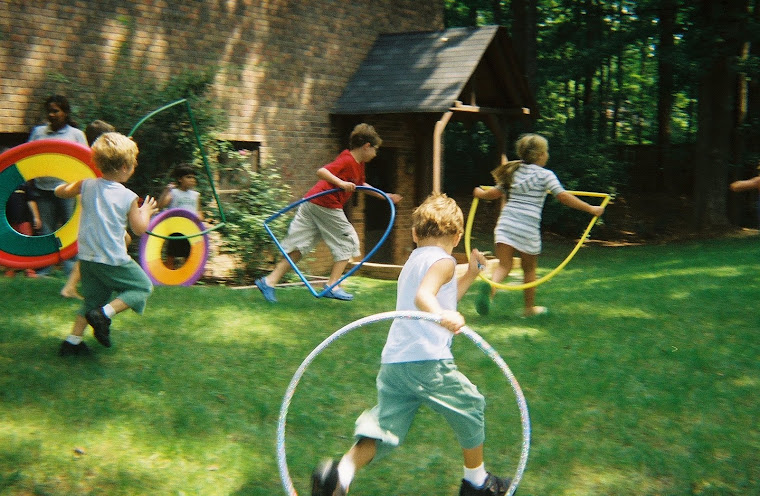
Kids learning through doing!!
Sunday, January 3, 2016
How to pick a really GREAT pediatric OT


Thursday, April 30, 2015
Transitioning from homeschool to high school
Case Study: *(names changed)
Jack is a 14 year-old teen who is transitioning from
homeschool to public high school. He has been homeschooled since mid-fourth grade when
school got “difficult” and kids got “mean”.
He has a diagnosis of Tourette’s Syndrome that is manifested by
intermittent body movements and a speech processing delay.
Although he has not been diagnosed, his behavior suggests
high functioning autism. He is very
ritualistic, displays rigid thinking, poor eye contact, cannot make inferences and
has difficulty understanding simple “jokes”.
With his fixed sense of “right and wrong” and “fairness”, he has little
tolerance for “gray areas” and /or “maybes”.
Initially seen in OT for fine motor issues, Jack is now able
to write legibly in cursive and paraphrase articles from the newspaper etc.
He prefers to memorize rather than reason out tasks and has
difficulty with organization and sequencing.
When “stumped” he sits and waits for the OT to help him as he does at
home with his mother/teacher.
He has returned to OT to learn basic high school survival
skills inclusive of but not limited to note takings, task organization and
social awareness of self and others.
Current concerns
The differences between homeschool and high school are
huge. At home he does not need “ask” for
help because his needs are anticipated in school he will need to raise his hand
and ask for help.
At home he gets immediate feedback as to whether he is right
or wrong and gets redirected. At school he may have to wait days to get a test
and or homework back.
He likes to try things first to see if he can do and then he
will ask for help. Often in school there are no instant “replays”.
It is difficult for him to reason out what he needs to ask
and/or how to ask it. He is used to immediate intervention. In school with
often 27+ children in a room learning to wait and move on while you are waiting
is a necessary skill.
At home mom “waits” for him to write his responses, in
school the pace is much faster.
At home mom can offer “cues” as needed, at school this is
not usually an option.
Many of the kids he will meet will have been together since
elementary school. And although there is novelty to being the “new kid” social
adaptation and learning how to go with the flow are essential school/social
survival skills.
Occupational
Therapy Interventions (partial list of ideas)
Create motivation: easier said than done
but help to delineate the difference between fun and happiness. With fun being equated with a movie or an
amusement park experience (all you have to do is “show up”) and happiness being
equal to learning and achieving something.
Get the teen to name something he has done that is “fun” and something
that he has conquered as “happiness”.
Teach how to ask the question: Provide novel experiences that he has not done before (pedaling a foot bike, etc.) and get the teen to think through the process of learning what he/she already knew and what they had to learn.
Make a process booklet for reference: outline in booklet form what are the elements of getting a task done (i.e., establishing what comes first, how to know when you are done, how to proof-read, create priorities, etc.) Let the teen talk and the OT write and then review it (with them with them using their own words) for understanding.
Role play classroom situations: inclusive of note taking and the elements of how to get down the main ideas; capturing key words, working in a group or with (an assigned) peer. What do you do if you do not like the person?
Practice task problem solving: use visuals—what happens when the teacher want “X” and you are sure it is “Y”. Taking correction is a very big part of this. Reasoning and keeping things in perspective, not making a “fix this” into an “indictment” of yourself and/or self-worth. Learning the art of compromise.
Mind shakers: things to do that can help you “get back” when you go “blank”; repeat in your mind the words you are hearing, write the last word you recall, blink hard and fast 2-3 times, etc.
Facilitate study habits: when appropriate have the teen learn something as if they had to teach it to someone else. The best way to learn something is to teach it. Practice cross referencing notes with textbooks or online information and write write write write it down!! Research has shown that our immediate memory lasts just under 10 seconds for full recall.
Experience using inferential thinking: Use scripts from plays or movies (there are plenty of them online from old radio shows, etc.) and have the teen say in their own words what they think might happen next and why.
Teach debate techniques: substantiating what you say with actual facts instead of feelings to support your argument/reasoning. This will help with thought organization and sequential thinking.
Transitioning from the slower individualized pace of
homeschool to the often “hard knocks” of high school can put that teen on a
sharp learning curve, but with careful preparation and “behavioral tricks” in
his “back pocket” it can be done—and furthermore it can even be fun.
Friday, February 27, 2015
Defining Health and Wellness in Children
It is easy to define health…it is the absence of illness. It is not so easy to define “wellness”. It presents in so many forms: emotional,
physical, neurological, and cognitive, etc.
It means so many things. It is frustration tolerance. It is coping skills. It is endurance and
strength. It is problem solving. It is the ability to learn. It is the ability
to learn from mistakes. It is about
understanding boundaries and creating reasonable boundaries. It is about self-esteem, integrity, ethics
and empathy. It is about relationships.
In short, wellness is about life well lived.
That is true of children and adults. But what about “wellness” that is
unique to children. What does it look like and how do we teach children to seek
it, use it and more important create it in their daily lives?
Children live in the here and now.
“Forever” can be the next ten minutes or a whole day. “Pleasure” is “I
want it now!” Delaying
gratification is an often-tortuous concept for young children. “Tomorrow” is
light years away. Fun and happiness are interchangeable. Children lack the insight that fun is passive
(show up to movies, the park, the party) and happiness is active. Happiness is
achievement; pride in a job well done, the mastering of a new skill (riding a
bike), it is interactive and requires effort.
As parents we take our children to the doctor for yearly check-ups to
check growth and development. But where can you go for wellness? That is more
elusive and far less tangible.
In a society that wants to give our kids “what we didn’t have” we may
inadvertently be robbing them of opportunities to learn how to make their own
happiness. There are as it has been written, “blessings in a skinned
knee”. Being frustrated can teach
problem resolution, being angry about something can teach emotional management,
being overwhelmed can teach organization, losing can teach sportsmanship,
getting an “F” can be a motivator for better study skills. These are all necessary skills for living a
competent responsible healthy life. These are essentials for wellness.
It is fun to go to Disney World, but one cannot live there. No one can live a stress free life. All
things do not always have a “happy ending” but lots of things can have the
“right” ending.
As in baseball (my personal favorite sport), a swing and a miss can
teach better aim, measured timing and get the batter that longed for grand
slam. Not every time at bat, but that
time when everything “connects”—that is happiness and happiness is wellness.
Teaching your child that difficulty is not disaster it is an opportunity
for them to grow and learn. It is a
chance for them to learn how to overcome those issues that are currently
challenging for them. It can teach your
child compassion for others who are also experiencing a “tough time”.
And at the end of the day what is it we really want for our
children? We want them to be “good”
people. We want them to be independent.
We want them to be part of a community of caring. We want them to chart their
own course, follow their dreams and be proud of themselves. We want them to be
successful people. We want them to know and appreciate the value of hard work
well done. We want them to always strive
for happiness and to achieve a life of wellness.
Invariably life, as my overly wise daughter Jenny (at age 7/now 41)
wrote on a bookmarker for me, “Life is not easy”. Who said it should be easy?
However, done right, it can be well lived.
Tuesday, January 13, 2015
Understanding the difference between a developmental pediatrician’s evaluation, a psychological and an occupational therapy evaluation.
|
|
Taken from:
|
Original Source:
Children's Special Services, LLC
|
|
Developmental
Pediatrician
…a developmental
pediatrician plays a crucial role in the treatment of children with
developmental and behavioral conditions.
The following is a
short list of some common conditions which a developmental pediatrician may
diagnose and treat.
▪
Learning Disorders – A wide range
of conditions fall into this section of developmental conditions. Children
who find writing, public speaking or math unusually difficult may benefit
from a developmental pediatrician, as do children with dyslexia. In these
cases, the developmental pediatrician will diagnose the child and then
provide further treatment, which often includes a referral to a specialist in
a particular condition or an academic center which specializes in learning
disorders.
▪
Developmental Delays – If a child
has fallen behind his peers in basis skills, such as mobility, cognition,
language or speech, a developmental pediatrician can be extremely helpful.
They are trained to recognize these delays earlier than an MD with no specialized
training, and therefore help children sooner. The earlier a child receives
help with a developmental delay, the better the chances that he will quickly
catch up to his peers. As with learning disorders, a developmental
pediatrician has the option to treat the condition herself or to refer the
child to another doctor or therapist who specializes in one particular delay,
such as a speech therapist.
▪
Habit Disorders – Encompassing
Tourette’s Syndrome as well as a variety of tic behaviors, habit disorders
can be very disruptive. Not only are they confusing and frustrating for the
child, but for the child’s family as well. When treated early in life, tic
disorders can often be eliminated or minimized quite well.
▪
Regulatory Disorders – Feeding
issues, disciplinary problems, bed-wetting and sleep disorders fall into this
area of research. A developmental pediatrician is trained to spot the signs
of these disorders as well as to treat them, although, as with many issues, a
referral to a specialist may be the best solution. These issues are often
only symptoms of underlying psychological conditions, such as excessive
stress, and so a child psychologist may be recommended. In many instances,
however, a developmental pediatrician has the skills to deliver effective
therapy, especially in mild to moderate cases.
|
Psychological assessment
is a process of testing that uses a combination of techniques to help arrive
at some hypotheses about a person and their behavior, personality and
capabilities. Psychological assessment is also referred to as psychological
testing, or performing a psychological battery on a person.
4 Components of
Psychological Assessment
Norm-Referenced
Tests
A
standardized psychological test is a task or set of tasks given under
standard, set conditions. It is designed to assess some aspect of a person’s
knowledge, skill or personality. A psychological test provides a scale of
measurement for consistent individual differences regarding some
psychological concept and serves to line up people according to that concept.
Interviews
A
formal clinical interview is often conducted with the individual before the
start of any psychological assessment or testing. This interview can last
anywhere from 30 to 60 minutes, and includes questions about the individual’s
personal and childhood history, recent life experiences, work and school
history, and family background.
Observations
Observations
of the person being referred in their natural setting — especially if it’s a
child — can provide additional valuable assessment information. In the case
of a child, how do they behave in school settings, at home, and in the
neighborhood? Does the teacher treat them differently than other children?
How do their friends react to them?
Informal Assessment
“..a
supplement to standardized norm-referenced tests… informal assessment procedures, as such as projective
tests or even career-testing or teacher-made tests…. language samples from
the child, test the child’s ability to profit from systematic cues, and
evaluate the child’s reading skills under various conditions.
|
Definition
of occupational therapy:
Occupational Therapy is the use of everyday
tasks to assess the needs of the child inclusive but not limited to their
physical, neurological/ (sensory), emotional, and developmental skills.
The occupational therapist uses both
norn-referred standardized tests and informal clinical observations to
ascertain the levels of both actual and potential functional capacities.
Testing
components:
Standardized
Tests:
Visual Perceptual Skills-Testing: Assesses the seven realms of perception with the motor component
removed to look specifically and visual processing.*
This can include preliminary screening for
Dyslexia and related visual issues.
Visual
Motor Testing:
Evaluates the visual processing with the
motor component to assess how what the child sees is translated into a
specific motor response.**
This can include the testing for Dysgraphia
and Dyscalculia as well as motor co-ordination.
Fine
motor: in hand
manipulative tests and dominance testing.
Sensory
Assessments:
(gross motor abilities included)
Evaluates behavior inclusive of frustration
and coping skills, Visual and auditory reactions and actions; Functional
response patterns inclusive of tracking reaching, grasp and release motor
patterns, diadokokinesia, range of motional strength, flexion and extension
patterns, balance, muscle tone, equilibrium, stability and weight shift,
reflex reactions, functional movement patterns inclusive of but limited to
walking/running/etc., body image, activities of daily living/self cares,
tactile processing, proprioception, stereonosis with vision occluded,
position sense, and handwriting.
Evidence
based practice:
Utilizing the results of the testing and
current research the occupational therapist then designs a treatment plan
specific to that child’s individual needs.
|
Subscribe to:
Posts (Atom)